KHAJURAHO
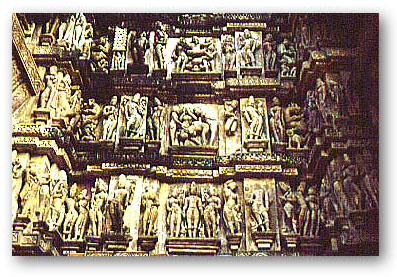
The very name of Khajuraho at once conjures up images of eroticism and sexual display straight from the annals of Kama Sutra. Indeed, the travel organizations and even the Indian Government’s Tourism Department use these images for promoting tourism to India. However, once there, most visitors feel let down. This is not so much because erotic art is not found there, but it is done with professionalism and nothing evokes a hint of vulgarity. If one goes to see the myriad sculptures and their beauty, one comes away awe-struck and satisfied. The sheer number of sculptures is mind-numbing; the artistry of the sculptures in capturing not only the figures but the expressions of the subjects ,and the sculptors’ ability to narrate a story are even more remarkable. In short, visit Khajuraho for an artistic experience and not for any erotic appeal!
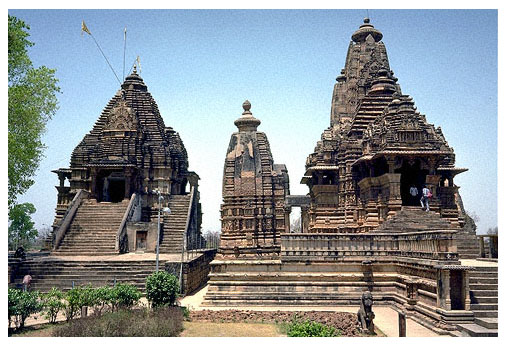
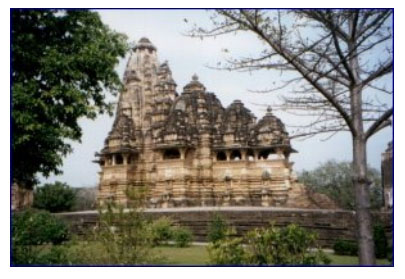
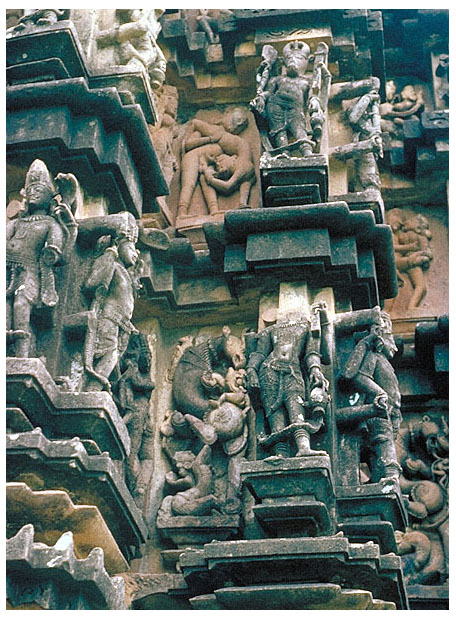
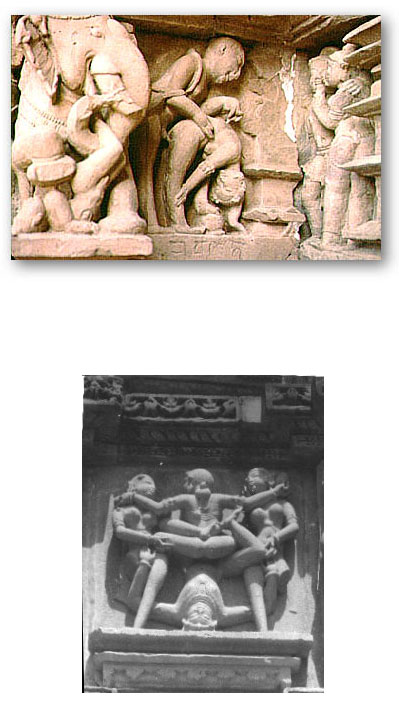
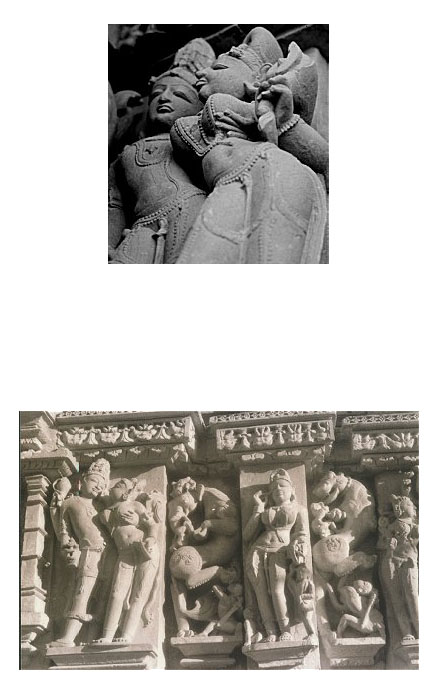
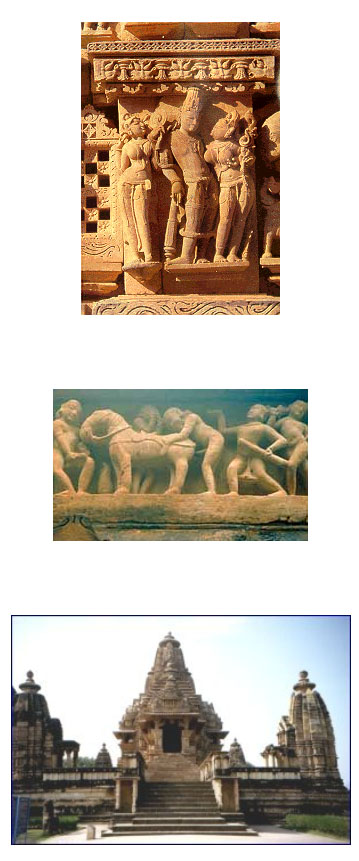
The temples of Khajuraho (near the small town of Jhansi, in Madhya Pradesh) were built over a period of 100years (AD 950-1050), during the reign of the Chandela Rajputs. Although constructed in granite, of the 85 original temples, only 22 have survived. A radical departure from the usual Indian temple construction is placing the temple upon a high masonry terrace, without an exterior wall around the temples. All Indian temples are studded with faces and figures of Hindu deities and depiction of scenes from the Hindu mythology. The Khajuraho temples have a profusion of human figures depicting ordinary lives of the people of that age as well as the Hindu deities. And interspersed in this crowded arena are men and women in every conceivable sexual positions and acts. Artistically rendered, one can only infer that the sculptures (and their benefactors) meant to depict all aspects of their daily life (and not exclude the intimate acts). In doing so, one cannot but infer that both the people were prosperous and liberated (and thus perhaps educated and enlightened) and did not feel inhibited about advertising their sexuality as well.
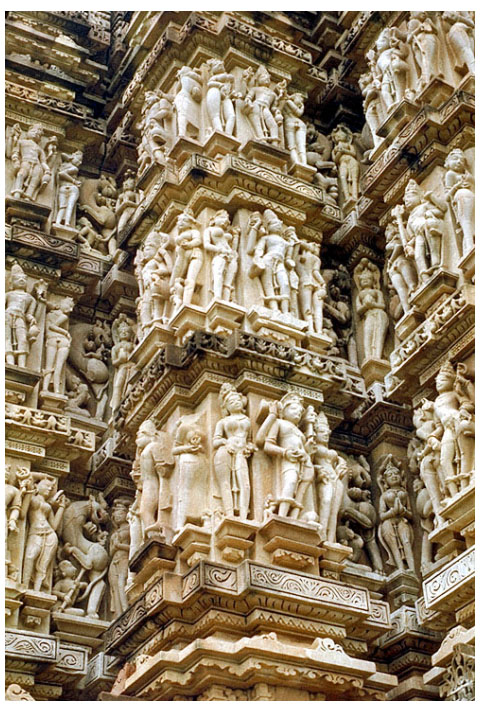
I will now present some fine examples of the sculptures and images from the Temples of Khajuraho:
BIBLIOGRAPHY:
1) www.meadev.nic.in/tourism/exotic/khajuraho.htm
2) http://travel.hubcom.net/nthindia/khajuraho.html