RAJA RAVI VARMA
(1848 To 1906)
I was brought up with images of the gods and goddesses of Hindu mythology and never once stopped to think that those images had not existed until the artistic genius of Raja Ravi Varma! He had the vision and talent to render on canvas, realistic, human-like images of the deities. Ravi Varma was also the first serious Indian painter to use oil as his medium and to use live models to create some of the scenes in his pictures. Another departure from the norm (from Indian painters) is his style; many of his paintings are quite similar to those of the Grand Masters from Italy or Holland. And the quality rivals the best of them!
Raja Ravi Varma was born into the royal family of Kilimanoor, near Thiruvananthapuram (Trivandrum) in Kerala State. His talent was quickly recognized by the monarch and a studio was set up for his use. Thus started a life-long career that would bring acclaim to the artist, the kingdom and catapult him as the premier artist of India. His success was so complete that during his later years he wouldn’t enter his works in competitions so that other artists would have a chance to win!
His favorite subject was people, especially women. From portraits to figures and depiction of elaborate scenes from Hindu mythology, his sense of proportion, perspective, rendering of skin tones and the elaborate folds and texture of clothing, Ravi Varma was a cut above other artists. Ornaments were painted true to the metals, the hands and feet perfectly shaped, the expressions captured accurately and the colors and composition rendered with a rare sophistication.
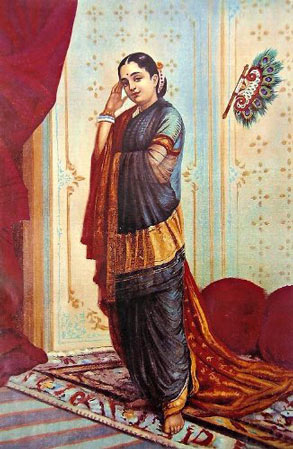
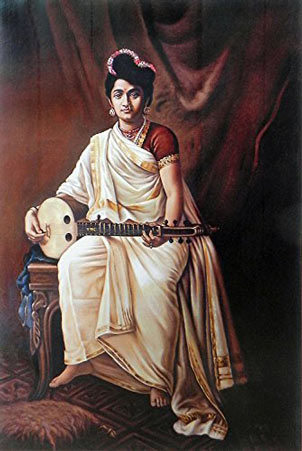
No amount of description will do justice to the images so I will now take the readers to some examples of Ravi Varma’s paintings. I have grouped the paintings under four headings:
- Group A: Portraits
- Group B: Paintings of common life situations
- Group C: Depiction of scenes from Hindu mythology and
- Group D: Hindu deities
GROUP A: PORTRAITS
In general, the portraits of Ravi Varma evoke images of Rembrandt’s paintings. The dark background, the subdued light playing on the subject’s face, the masterly treatment of the ornaments and clothing all are quite similar. Some of the examples are:
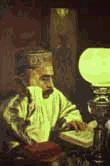
i) “The Student”: Here the subject glows in the gentle, almost phosphorescent glow emanating from the table lamp. The artist has captured the intense concentration of the student as well.
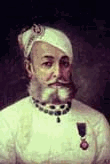
ii) “Rai Pamalal of Udaipur”: In this portrait the royal displays a quiet dignity. This is a good example of Ravi Varma using the dark background to bring to fore the subject’s features.
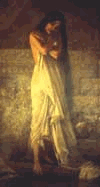
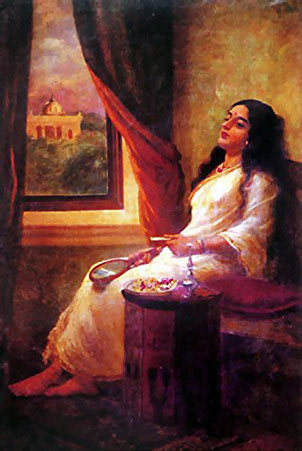
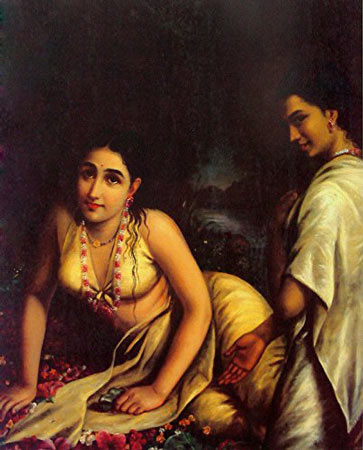
iii) “Lady after her bath”: This stunning painting has a dream-like quality, as if the beauty of the girl is an ideal. Her proportions are accurate, the folds of clothing accenting the decent amount of nudity. This is one of the most expressive paintings of Ravi Varma.
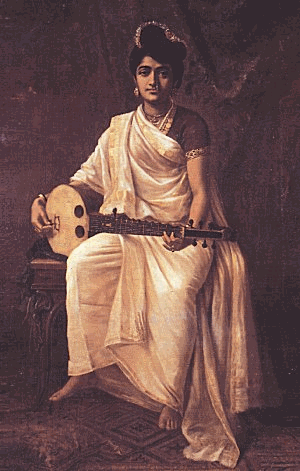
iv) “Malabar girl”: This classic has everything that Ravi Varma is renowned for. If an artist’s ability can be judged by the shape of the hands and fingers (these are difficult for the average artist), Ravi Varma scores big in this painting. The great harmony that the delicate figure of the girl strikes with the pose, the play of the folds of clothing and the subdued glitter of her jewelry all speak volumes for Ravi Varma’s authority over oil painting.
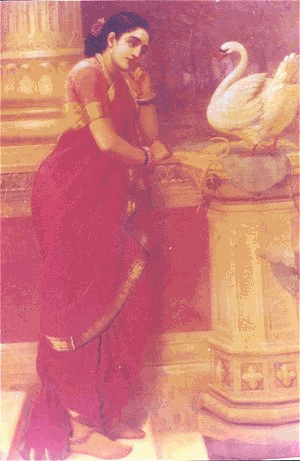
v): “Damayanti”: The most renowned of all of Ravi Varma’s portraits, this painting captures the melancholy of the heroine and adorns it with the simple rendition of sari and its accompaniments. The background, including the swan is in perfect synchrony with the main subject matter.
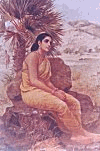
vi) “Shakuntala”: A personal favorite of mine, Shakuntala is a star among a bevy of stars created on canvas by Ravi Varma. Not only is this painting a superb example of perfectly executed masterpiece, the despondency depicted in this heroine is quite unique. I adore this painting!
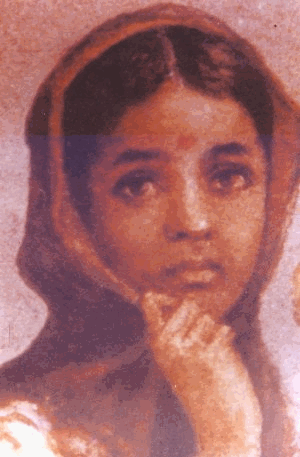
vii) “Village Belle”: A rare close-up portrait by Ravi Varma, this painting makes a straightforward statement of a simple girl who exudes innocence. It underlines the creative power of a master painter.
Contemplation
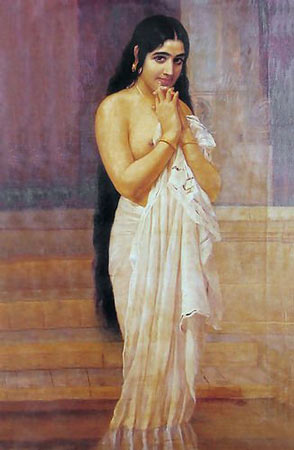
Fresh from a both
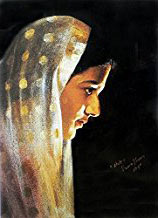
Indian beauty
xii) Kadambari
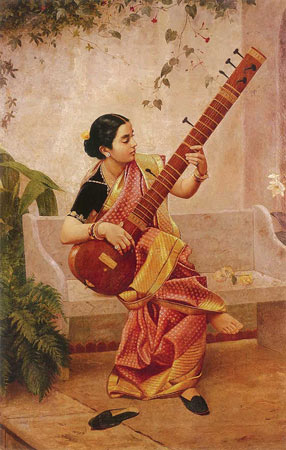
Kadambari
xiii) Kerala beauty
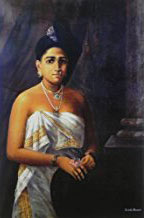
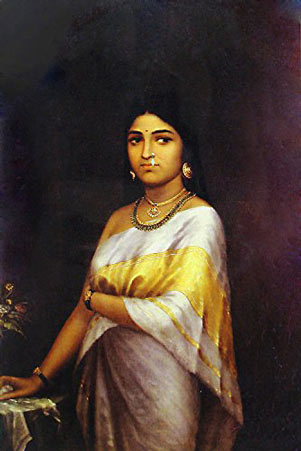
Kerala Royal Lady
l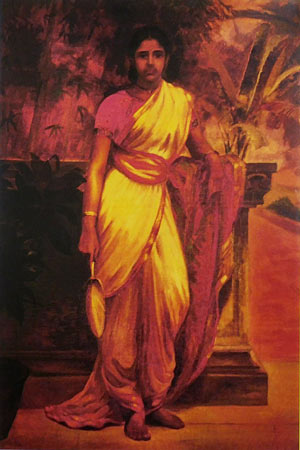
Lady near wall
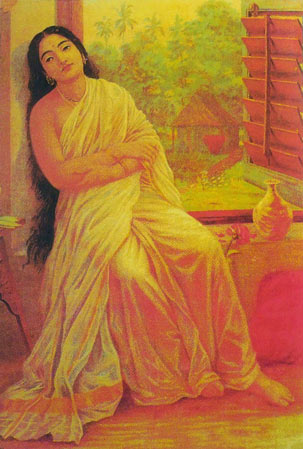
Lady near a window
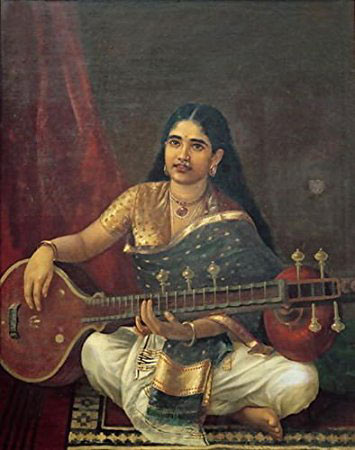
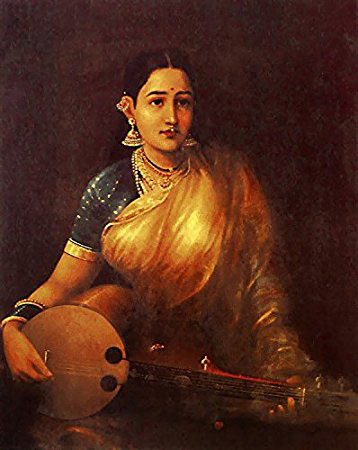
Lady playing veena
i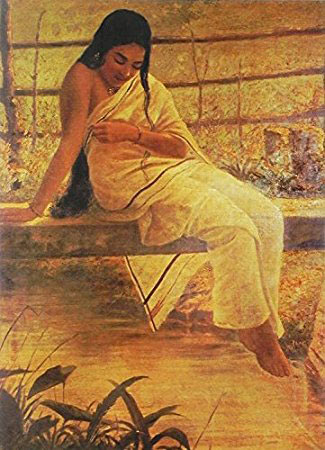
Lady sitting on the bridge
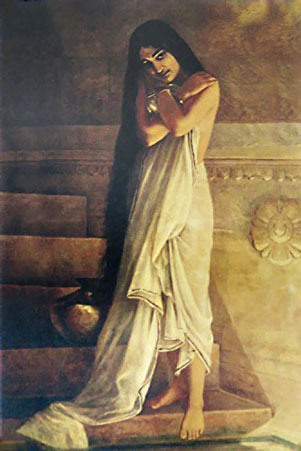
Lady taking bath
Lady with sarad
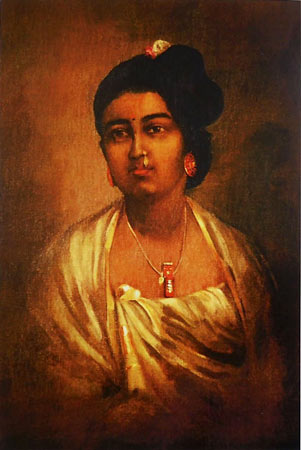
Malayalee lady
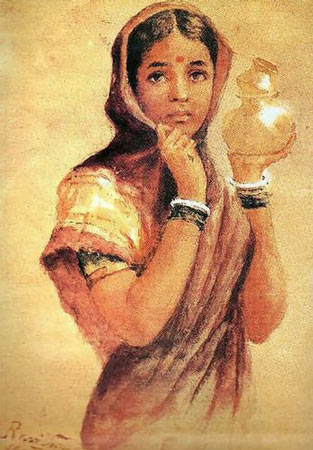
Milk maid
xxiii) Portrait of a lady
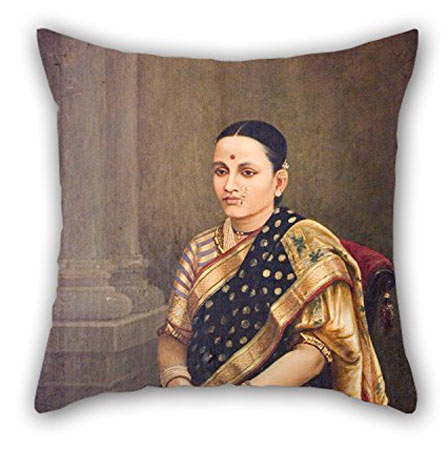
Portrait of a lady
xxiv) Priest
Priest
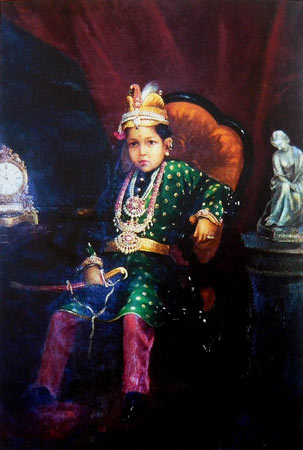
Prince
xxvi) Putana Moksha
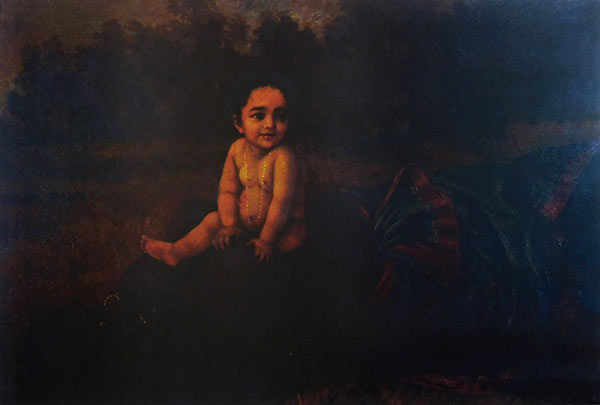
Putana Moksha
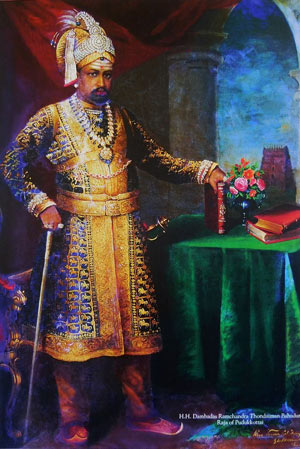
Raja of Pudukkotai
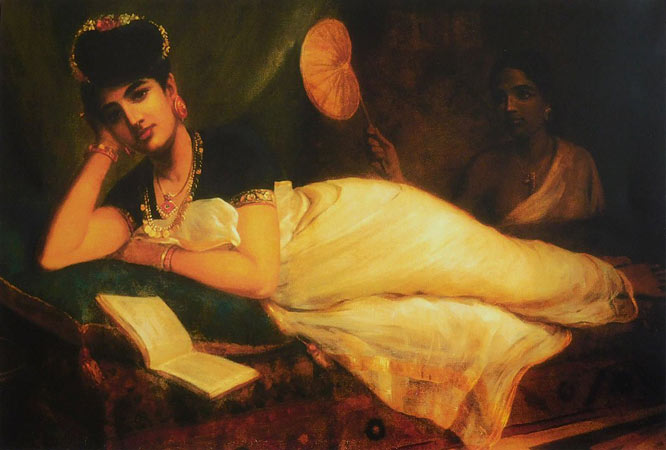
Reclining woman
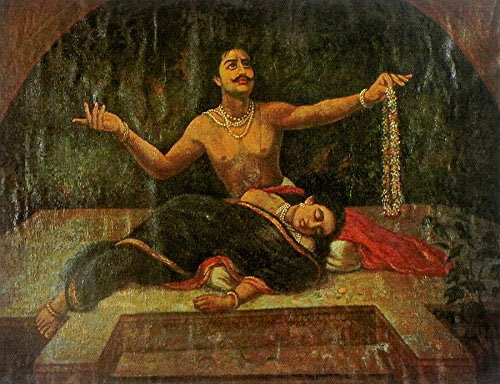
Sorrow
Vasanthasena
xxxi) Veena player
Veena player
GROUP B: PAINTINGS OF EVERY DAY THEMES
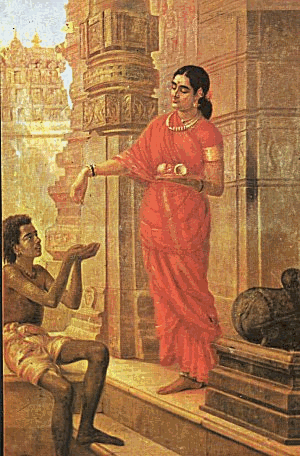
i): Temple Alms: In this painting the artist lavished so much care and attention to detail to the background that it attains equal importance to the main characters, the two people. The background also shows his mastery of perspective as well as that unique quality to impart the texture of the subject. One can feel at once the strength and permanence of the granite that was carefully carved to form all sorts of intricate patterns. The woman giving alms and the young man receiving it are “caught-in-the-action”….a splendid frozen moment!
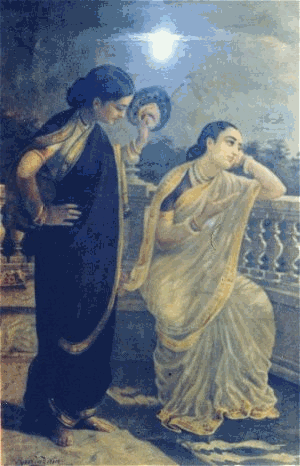
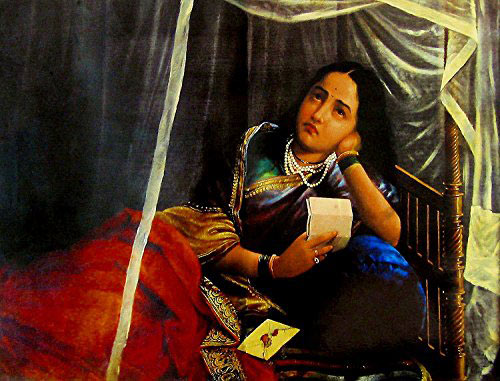
ii) “The Heartbroken”: Another expressive painting that is at once eloquent and one that attests to the artist’s mastery of painting technique.
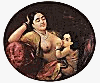
iii) “Breast feeding”: A rare semi-nude by Ravi Varma. While technically the painting cannot be faulted , absent is the mother’s expression of maternal affection. A somewhat nonchalant attitude of the mother is rather surprising.
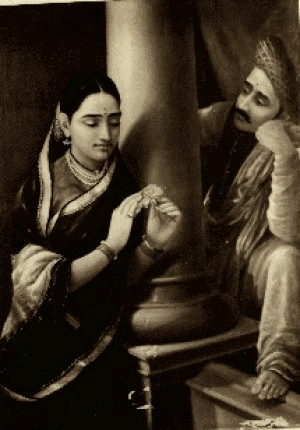
iv) “Romancing Couple”: This delicate subject is masterly composed by Ravi Varma. One could get that “warm and fuzzy feeling” whereby time passes by without the need for uttering any word. One shouldn’t miss the technique employed in depicting the pillar; the fine roundness and the straight edges are superb.
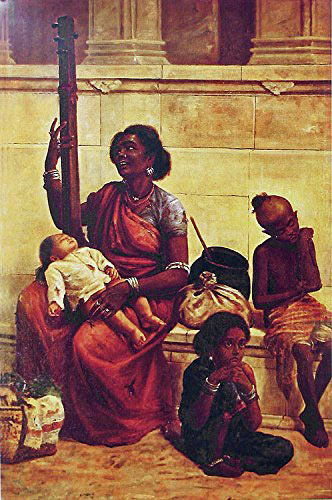
v) “Family of Beggars”: While this painting does speak to the helplessness of the family (especially in the expression of the girl sitting in the foreground), I wish the woman weren’t as well-fed. One never sees a fat beggar in India!
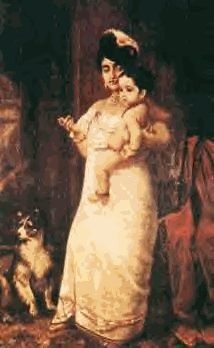
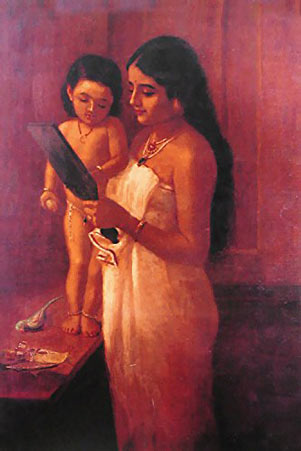
vi) “There Comes Papa”: The perennial favorite theme of mother and child is depicted in this painting by Ravi Varma ever so delicately. Most painters find the subject of a small child difficult to tackle. Not so this artist. What a delight to the eye! The mother’s expression, the clothes and her figure are all exact and thoroughly compliments this true masterpiece.
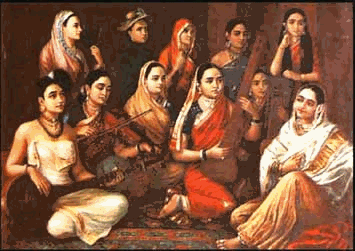
vii) “Musicians of India”: This painting is not a favorite of mine. I do not see the purpose of the painting or the way the characters are spread around the picture as if stacked up on a book-shelf. In fact, the clutter takes away from the technical mastery of Ravi Varma. However, this is a well-recognized painting of the artist.
viii) "Disappointing News"
vix) "Looking Into Mirror"
x) "Persian Damsel Godess"
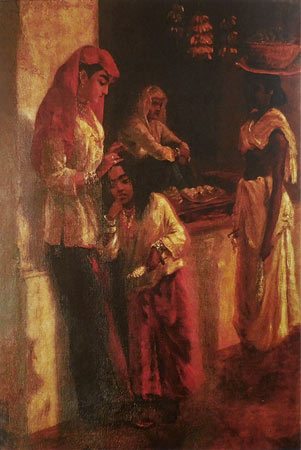
xi) "Stolen Interview"
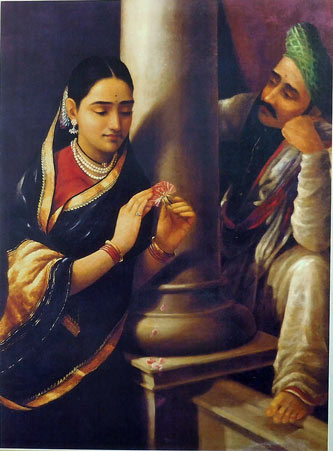
C: SCENES FROM HINDU MYTHOLOGY:
It is in these paintings Ravi Varma’s grandeur becomes obvious. Perfectly proportioned men and women set against elaborate background rival any painting by the Italian or Dutch masters. I will present the following, in order, without critiquing any of them individually:
i) “Victory”:
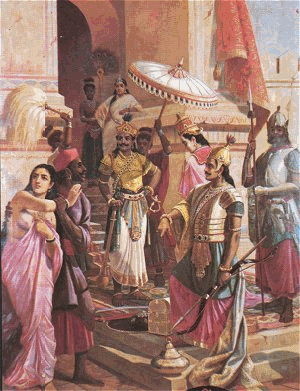
ii) “Draupadi in the Court of Virata”:
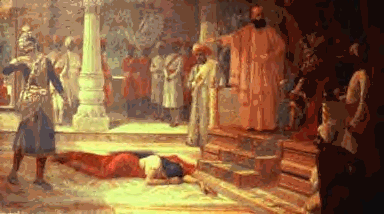
iii) “Jatayu”:
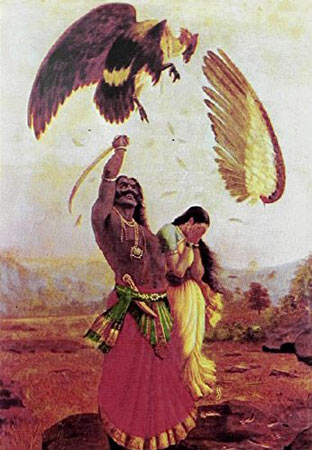
iv) “Rama and Varuna”:
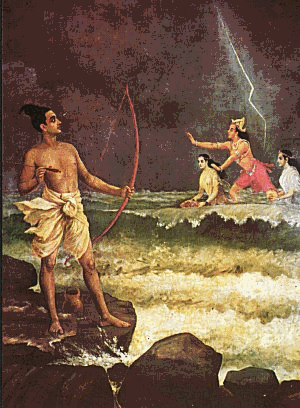
v) “Krishna Ambassador”:
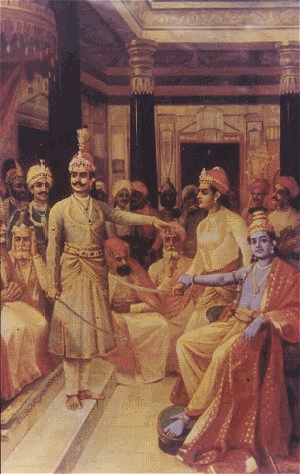
vi) “Shakuntala looking back…… ”
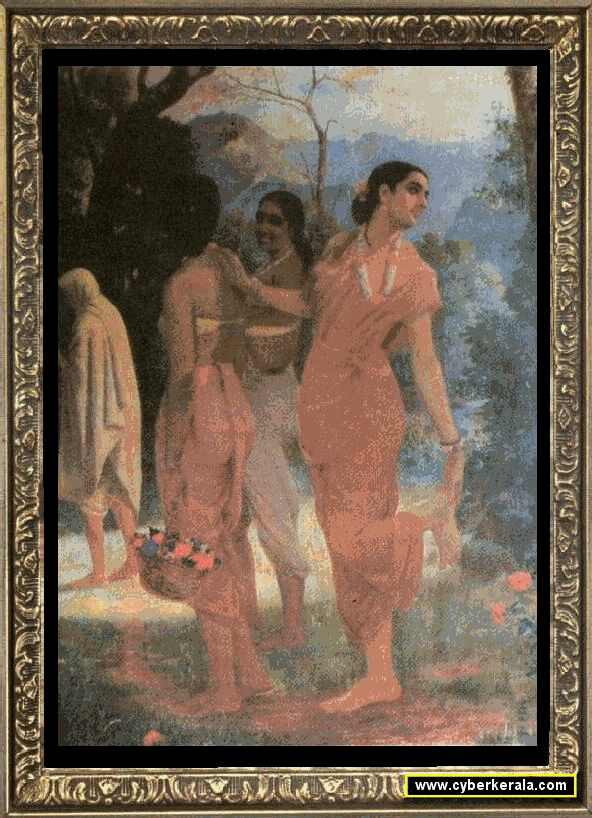
vii) "Urvashi"
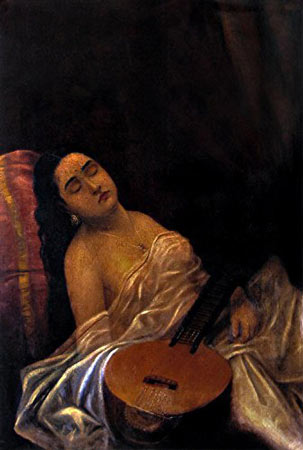
viii) "Sita Being Taken Away"
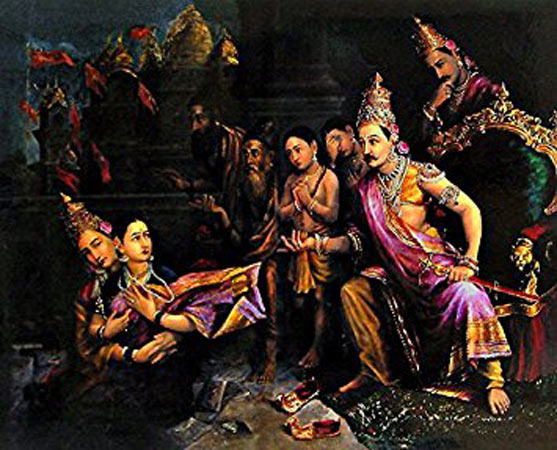
ix) "Rama Releasing Ahalya From Curse"
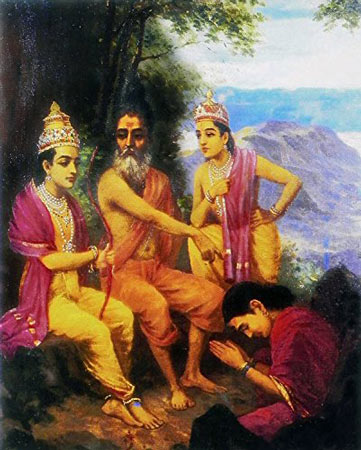
xi) "Rama Breaking the Bow"
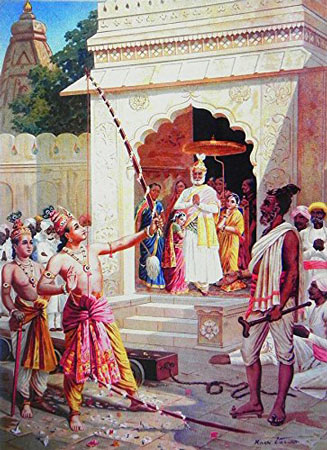
xii) "Sairandhri Draupadi"
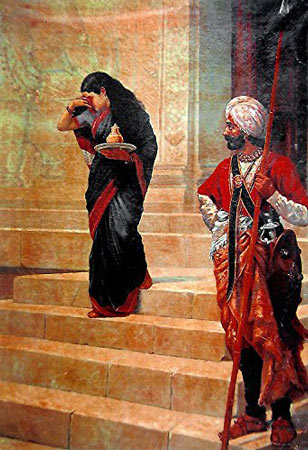
xiii) "Radha and her Sakhi"

xiv) "Mohini Asking Rumangada"
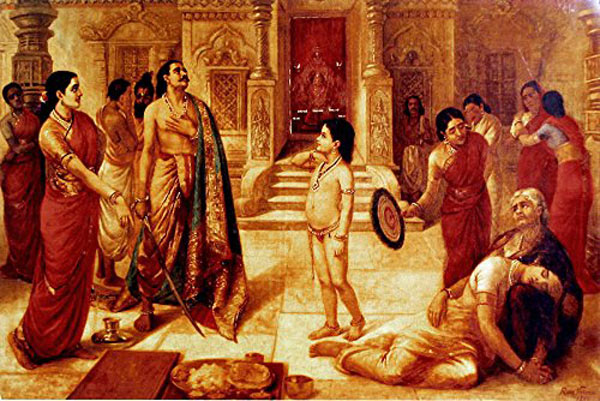
xv) "Lord Shiva's Anger"
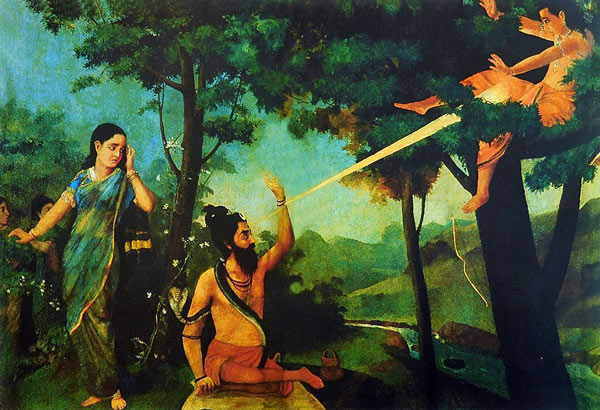
xvi) "Lord Krishna with Balarama"
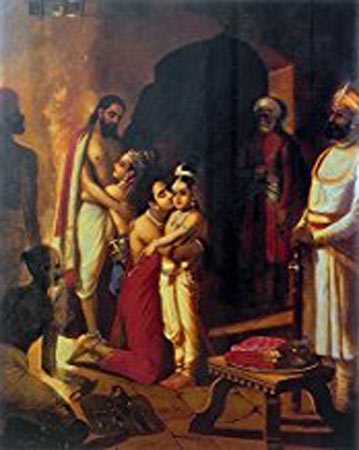
xvii) "King Shantanu Falling in Love with Satyavati"
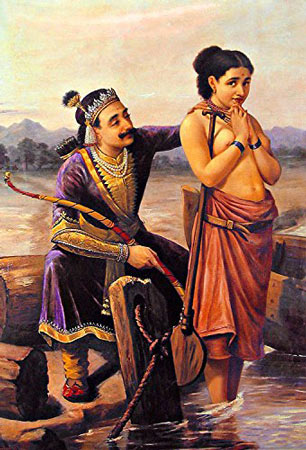
xviii) "Krishna as Envoy"
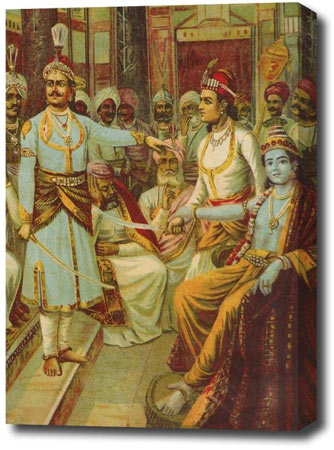
xix) "Kansa and Maya"
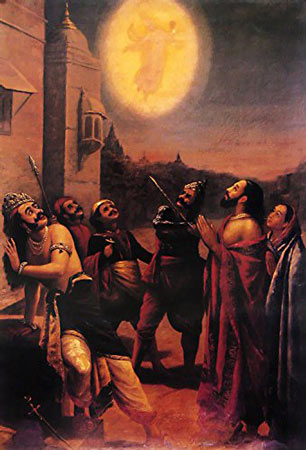
xx) "Draupadi Vastraharan"
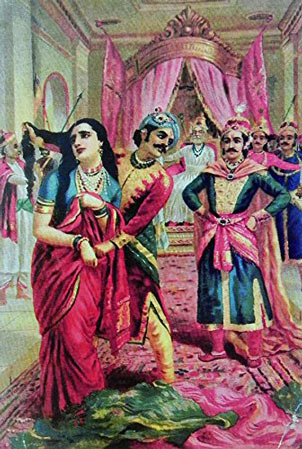
xxi) "Damayanthi"
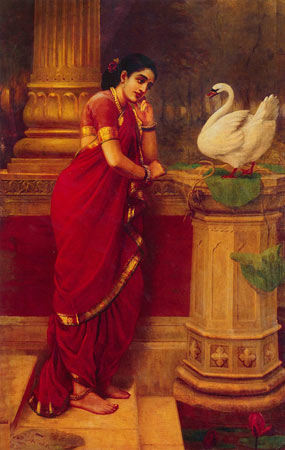
xxii) "Damayanthi II"
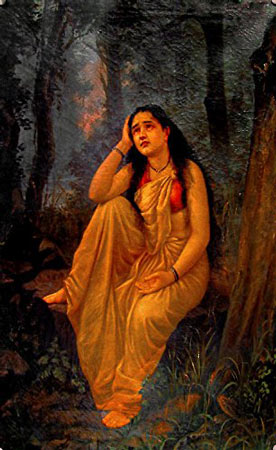
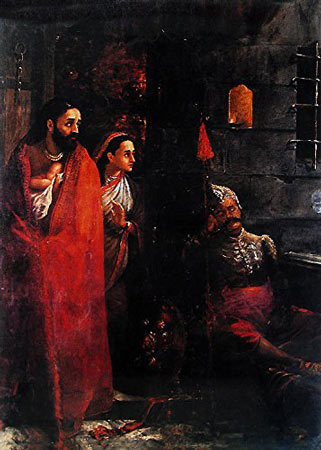
xxiii) "Birth of Krishna Vasudeva"
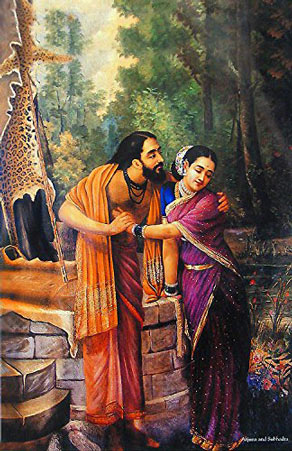
xxiv) "Arjuna and Subhadra"
xxv) "Damayanti"
D: DEITIES OF HINDU MYTHOLOGY:
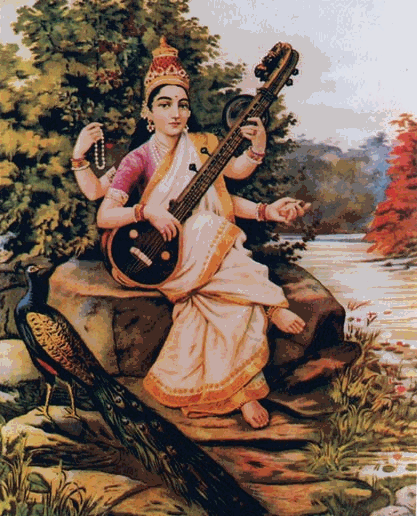
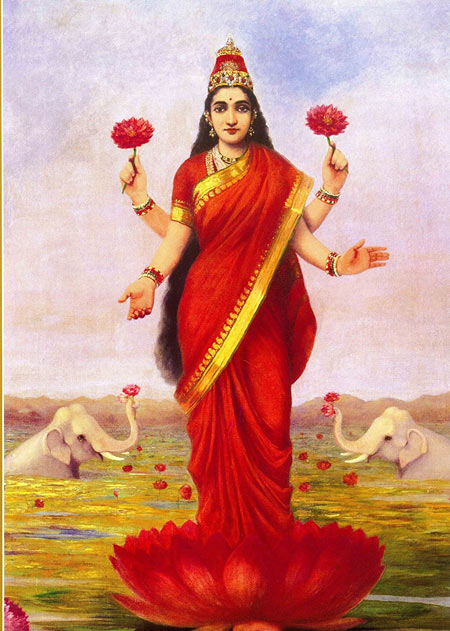
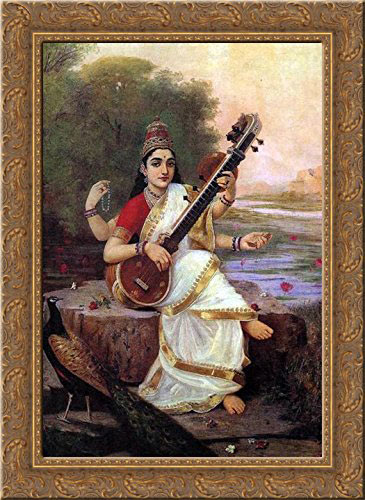
In this segment, I will present a single representative painting of satisfactory image quality I could find on the internet, a favorite of mine as well, Saraswati, the goddess of learning and wisdom: